
shockWAVE Therapy for Erectile Dysfunction
A Regenerative Approach to Erectile Dysfunction
Healthy erectile function depends on a healthy vascular system. Over time, blood vessels can lose elasticity and become less efficient at delivering blood throughout the body, including to the penis. These changes in vascular function are a common contributor to erectile dysfunction (ED), even among men who otherwise consider themselves healthy.
Conditions such as high blood pressure, elevated cholesterol, diabetes, cardiovascular disease, obesity, smoking, and physical inactivity can accelerate vascular changes. Because the arteries supplying the penis are relatively small, erectile difficulties may appear before other noticeable symptoms of vascular disease. In some men, ED is an early indicator of broader cardiovascular health concerns.
Low-intensity shockwave therapy (Li-ESWT), also commonly associated with GAINSWave®, is a non-invasive treatment being investigated for its ability to improve erectile function by stimulating biological pathways involved in vascular repair. Rather than producing a temporary pharmacologic effect like sildenafil or tadalafil, shockwave therapy is intended to influence the underlying vascular environment that supports erections.
Clinical research suggests that appropriately selected men, particularly those with mild to moderate vasculogenic ED, may experience improvements in erectile function. However, responses vary, and the treatment remains investigational for erectile dysfunction in the United States.
At Kass Precision Medicine, we believe effective ED treatment begins with understanding why erectile function has declined. Our comprehensive evaluation considers vascular health, hormonal status, metabolic factors, medications, and other potential contributors before recommending shockwave therapy as part of an individualized treatment strategy.
Schedule a Shockwave Therapy Consultation Today
What Is Low-Intensity Shockwave Therapy?
Low-intensity extracorporeal shockwave therapy (Li-ESWT) uses controlled acoustic energy delivered through the skin to stimulate biological responses within underlying tissues. Shockwave technology has a history of medical applications in fields such as orthopedics and wound healing. Its potential use in sexual medicine has attracted increasing research interest because of the relationship between vascular function and erectile health.
In men with vasculogenic erectile dysfunction, the proposed goal is to improve circulation within the erectile tissues by encouraging processes involved in vascular repair and remodeling.
Preclinical studies suggest that low-intensity acoustic waves may stimulate growth-factor signaling, influence nitric oxide pathways, and promote angiogenesis - the development of new blood vessels. These mechanisms offer a potential explanation for improvements in erectile function observed in some clinical studies. However, the degree to which these biological changes occur in human penile tissue, and how consistently they translate into lasting clinical benefits, remains under investigation.
Unlike medications that facilitate erections while active in the body, shockwave therapy is being studied for its potential to produce improvements in erectile function that persist beyond an individual treatment session. For men who respond, potential benefits may include improved erection firmness, greater reliability, and enhanced responsiveness to oral ED medications.
How Does Shockwave Therapy Work?
An erection depends on a coordinated interaction between the nervous system, blood vessels, and smooth muscle within the penis.
During sexual arousal, penile arteries dilate, allowing blood to enter the erectile tissues. As these tissues expand, venous outflow is restricted, helping maintain the pressure required for a firm erection.
When vascular health declines, blood vessels may become less responsive, limiting the ability to achieve or sustain adequate penile rigidity.
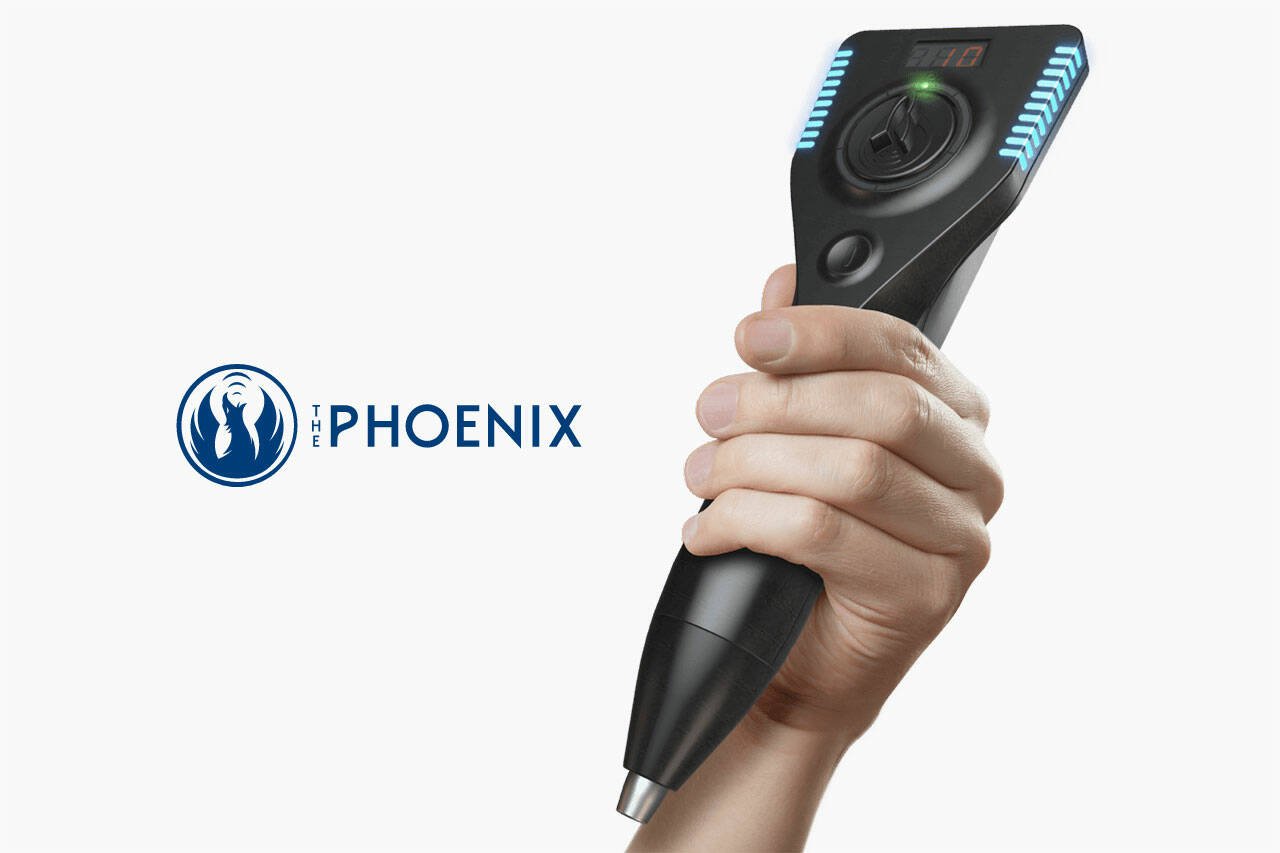
Shockwave therapy delivers low-intensity acoustic pulses through a handheld device positioned externally along targeted areas of the penis. These mechanical pulses are intended to stimulate cellular signaling pathways associated with vascular repair and tissue remodeling.
Research suggests that low-intensity shockwaves may:
Promote angiogenesis, or the formation of new microvasculature
Influence endothelial function and nitric oxide signaling
Support biological processes involved in penile circulation
Stimulate tissue-repair and remodeling pathways
These proposed mechanisms are being investigated as potential contributors to improved erectile function. Because shockwave therapy is intended to stimulate a biological response rather than immediately produce an erection, any treatment-related improvements may develop gradually over the weeks following a treatment series.
It is important to distinguish these proposed physiologic mechanisms from proven clinical outcomes. Although some studies have reported meaningful improvements in erectile function, results are inconsistent across treatment protocols and patient populations.
Who May Be a Good Candidate for Shockwave Therapy?
Patient selection is one of the most important considerations when evaluating shockwave therapy for erectile dysfunction.
The most promising clinical findings have generally involved men with mild to moderate vasculogenic ED, particularly those who retain some natural erectile function.
Not every man with erectile dysfunction is an appropriate candidate.
Low testosterone, medication side effects, neurological conditions, prior pelvic surgery, psychological factors, and other medical concerns may contribute to ED independently of vascular disease.
For these patients, shockwave therapy may offer limited benefit or may not address the primary cause of erectile dysfunction.
At Kass Precision Medicine, treatment recommendations are based on a comprehensive assessment rather than the assumption that all erectile dysfunction results from poor circulation.
Shockwave therapy may be worth discussing if you experience:
Mild to moderate erectile dysfunction associated with reduced penile blood flow
A gradual decline in erection firmness or reliability
ED associated with cardiovascular or metabolic risk factors
Erectile difficulties in the setting of diabetes or vascular disease
An incomplete response to medications such as Viagra® or Cialis®
A preference to explore non-invasive options beyond oral medication

PATIENT TESTIMONIAL
“I have been doing shockwave therapy for 3-4 years now. I originally started not due to any ED issues but simply because I wanted to be the best version of myself I could be. It is the same reason I go to the gym, try to eat healthy, and take vitamins. Anything that can roll back the proverbial clock is a “W” in my book. The process is painless and fast. I stay on top of it on a schedule that works for me, and the results don’t need explanation. I NEVER have to worry about that part of my physiology. It is an essential part of my self-care routine, and I have no plans on ever stopping.”
– KPM patient, age 63
Can Shockwave Therapy Reduce the Need for ED Medications?
Many men considering shockwave therapy want to know whether treatment could help them reduce their reliance on Viagra®, Cialis®, or other erectile dysfunction medications.
The answer depends on the severity of ED, its underlying causes, and the individual's response to treatment.
Some men participating in clinical studies have experienced improvements in erectile function following shockwave therapy, including men who previously had an inadequate response to PDE5 inhibitors.
For selected patients, improvements in vascular erectile function may increase responsiveness to medications such as sildenafil or tadalafil.
However, shockwave therapy should not be viewed as a guaranteed replacement for oral ED medications. The evidence is not sufficient to predict which patients will be able to reduce or discontinue medication, and some men may experience little or no improvement.
At Kass Precision Medicine, we often consider multiple treatment approaches together rather than viewing them as mutually exclusive.
The goal is to identify the combination of therapies most likely to improve erectile function while accounting for each patient's medical history, preferences, and long-term health.
Learn More About Erectile Dysfunction Treatment in our blog:
The Top Six Evidence-Based Alternatives to Viagra
What Does the Clinical Research Say About Shockwave Therapy for ED?
Low-intensity shockwave therapy has been evaluated in numerous clinical studies, including randomized controlled trials, sham-controlled studies, systematic reviews, and meta-analyses. Research has focused primarily on men with vasculogenic erectile dysfunction, where impaired penile blood flow contributes to reduced erection quality. Some trials have demonstrated improvements in validated erectile function scores, including the International Index of Erectile Function (IIEF). Studies have also investigated changes in penile blood flow and responsiveness to PDE5 inhibitors.
The most encouraging findings have generally been reported in men with mild to moderate vascular ED. However, the published literature has important limitations. Clinical trials have used different shockwave technologies, energy settings, treatment schedules, patient-selection criteria, and outcome measures. These differences make it difficult to establish a single optimal treatment protocol or reliably predict long-term results.
Professional medical organizations also differ in their interpretation of the evidence. The European Association of Urology offers a weak recommendation for low-intensity shockwave therapy in selected men with vasculogenic ED. In contrast, the American Urological Association classifies the treatment as investigational, and the Sexual Medicine Society of North America's 2026 position statement recommends against routine clinical use outside research settings.
Low-intensity shockwave therapy is not FDA-approved specifically for erectile dysfunction. Although published studies have generally reported a favorable short-term safety profile, additional high-quality research is needed to establish consistent clinical effectiveness, optimal protocols, and durability of treatment outcomes.
At Kass Precision Medicine, we believe patients should understand both the potential benefits and the limitations of emerging treatments. Shockwave therapy is one option within our broader approach to erectile dysfunction, and its role should be considered in the context of each patient's clinical findings and goals.
Why Clinical Experience Matters
Shockwave therapy involves more than applying a device to penile tissue. Appropriate diagnosis, patient selection, familiarity with the available research, and experience with treatment technology all influence clinical decision-making.
Kass Precision Medicine has more than a decade of experience incorporating shockwave therapy into men's sexual health care. Dr. Kate Kass was among the early U.S. physicians to adopt the technology for erectile dysfunction, and the practice has performed thousands of shockwave and regenerative procedures for men throughout Seattle, Bellevue, and the Pacific Northwest.
This experience has reinforced an important principle: not every patient with erectile dysfunction needs the same treatment. For some men, vascular dysfunction is the predominant issue. For others, declining testosterone, metabolic disease, medication effects, or multiple overlapping factors may be contributing.
Our approach combines extensive clinical experience with a comprehensive evaluation of the patient's overall health, allowing us to determine whether shockwave therapy is appropriate and how it may fit into a broader treatment plan.
Technology Matters: Understanding Different Shockwave Devices
Not all devices advertised as shockwave therapy operate in the same way. Different technologies produce different types of acoustic energy, with variations in energy delivery, penetration depth, and the way mechanical forces are distributed through tissue. These differences are important because clinical studies evaluating low-intensity shockwave therapy have used specific devices and treatment parameters. Results obtained with one technology cannot automatically be applied to another.
At Kass Precision Medicine, we use medical-grade shockwave equipment manufactured by Storz Medical, including both focused and radial technologies.
Focused Shockwave Therapy
Focused shockwave devices concentrate acoustic energy within a targeted region of tissue.
This technology allows energy to be delivered at selected depths and has been used in much of the published clinical research evaluating shockwave therapy for erectile dysfunction.
The ability to target deeper structures is particularly relevant when considering treatment of the erectile tissues.
Radial Shockwave Therapy
Radial pressure-wave devices deliver mechanical energy that is generally greatest near the surface and disperses through surrounding tissue. Because radial and focused technologies differ in their physical characteristics, they should not be considered interchangeable.
The clinical evidence for radial pressure-wave therapy in erectile dysfunction is substantially more limited, and its effectiveness has not been established to the same extent as focused shockwave technology.
Why Device Selection and Treatment Protocols Matter
Shockwave treatment involves several variables, including energy intensity, pulse frequency, number of pulses, treatment locations, and total number of sessions.
Differences in these parameters may affect both the biological response and clinical outcomes.
Kass Precision Medicine uses focused and radial technologies with attention to their distinct characteristics, the available evidence, and the patient's treatment objectives.
Our experience with both types of devices allows us to make informed decisions about their potential roles, while recognizing that optimal protocols for erectile dysfunction have not been conclusively established.
For patients researching shockwave therapy, it is worth asking what type of technology a clinic uses, whether that technology has been evaluated in published studies, and how treatment recommendations are determined.
The device matters. The protocol matters. And the clinical evaluation behind the treatment matters just as much.
Learn More About Shockwave Therapy In Our Blog:
Treating ED With Shockwave Therapy: Technology Matters
What to Expect During Shockwave Therapy Treatment
Treatment at Kass Precision Medicine begins with a comprehensive consultation to evaluate erectile function, review medical history, and identify factors that may be contributing to ED.
This initial assessment typically lasts approximately 45 minutes and helps determine whether shockwave therapy is a reasonable option.
The Treatment Procedure
Shockwave therapy is performed in the office using a handheld device applied externally to targeted areas of the penis.
The procedure is non-invasive and generally well tolerated. Most patients experience minimal discomfort, and anesthesia is typically unnecessary.
Individual sessions generally take approximately 30 minutes.
There is usually no required recovery period, and patients can return to normal daily activities, including sexual activity, immediately afterward.
How Many Treatments Are Needed?
Shockwave therapy is typically delivered as a series rather than a single treatment. At KPM, an initial treatment course commonly consists of six sessions, generally scheduled once or twice per week.
Depending on the severity of erectile dysfunction, individual goals, and treatment response, some patients may undergo a longer course of six to twelve sessions. These schedules reflect clinical protocols used in practice; research has not established one universally optimal regimen.
When Can Patients Expect Results?
Shockwave therapy is not intended to produce the immediate effect associated with oral ED medications. When patients respond, improvements in erection quality may emerge gradually over several weeks following treatment. Some men report improved rigidity, greater erection reliability, or better responsiveness to medication. Others experience limited improvement.
The duration of any benefit also varies, and there is not yet sufficient evidence to establish how long results will consistently last. After the initial treatment series, we assess the patient's response and discuss whether additional treatment or other ED therapies may be appropriate.
Shockwave Therapy as Part of a Comprehensive ED Treatment Plan
Erectile dysfunction is often a reflection of broader changes in vascular, metabolic, hormonal, or neurological health. At Kass Precision Medicine, we approach ED as a medical concern that deserves a thorough evaluation rather than treating erection quality as an isolated symptom.
Our physician-directed assessment considers the patient's sexual history, cardiovascular risk factors, hormone status, medications, lifestyle, and other aspects of health that may influence erectile function. When appropriate, comprehensive laboratory testing may help identify metabolic or hormonal contributors that would otherwise go unrecognized.
Shockwave therapy may be incorporated into a treatment plan alongside established ED therapies, including oral medications, injectable treatments, vacuum erection devices, and management of underlying medical conditions.
We also discuss other investigational regenerative treatments when relevant, including platelet-rich plasma (PRP), with clear explanations of the evidence and limitations. The objective is to identify the factors affecting erectile function and develop a strategy that addresses the patient's health and sexual goals as comprehensively as possible.
Better ED treatment starts with understanding the cause.
Vascular health, hormones, metabolism, medications, and lifestyle can all influence erectile function. At KPM, shockwave therapy is considered within a comprehensive medical evaluation - not as a one-size-fits-all solution.
Explore Shockwave Therapy at Kass Precision Medicine
If you're experiencing declining erection quality, an incomplete response to ED medications, or want to better understand your treatment options, our team can help.